
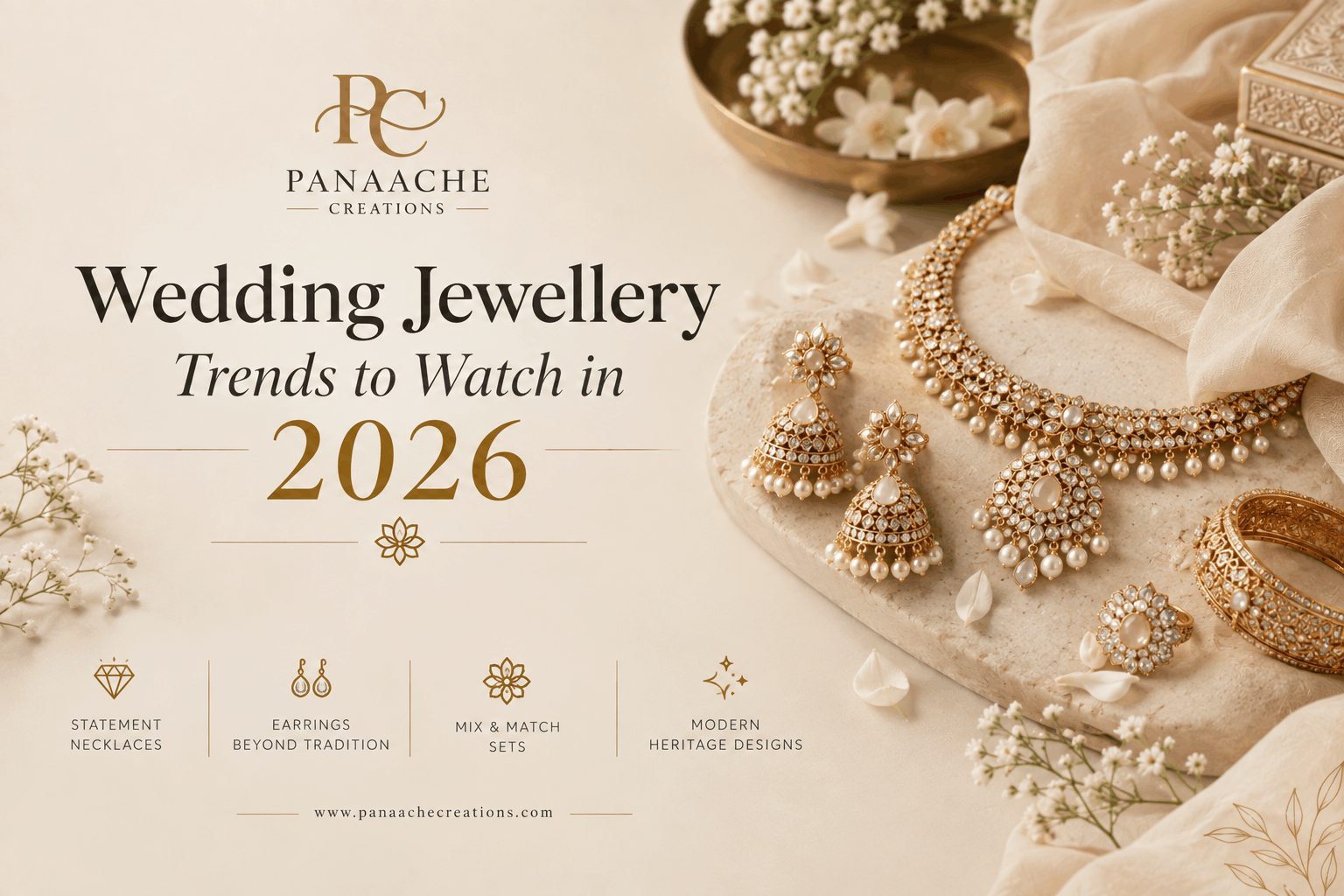
Wedding Jewellery Trends to Watch in 2026
eWedding jewellery has always been closely connected with tradition, but the way women are wearing it is changing. Brides today are not necessarily looking for the heaviest necklace or the largest pair of earrings they can find. They are paying more attention to how a piece looks with their outfit, how comfortable it feels during a long ceremony and whether they can wear it again after the wedding.
That change is becoming more noticeable in 2026. Jewellery is moving towards a more thoughtful balance between traditional craftsmanship and modern styling. Lightweight designs, layered necklaces, personalised pieces and jewellery that can be worn for more than one occasion are gaining attention.
For brides, bridesmaids and wedding guests, this opens up plenty of possibilities. You can still wear traditional jewellery without making the entire look feel overly heavy or formal.
Here are some of the wedding jewellery trends worth watching in 2026.
1. Lightweight Jewellery With a Bridal Feel
Heavy bridal jewellery is not disappearing, but lighter designs are becoming increasingly appealing. Brides may still want a grand look for the wedding ceremony, but wearing extremely heavy pieces for several hours can become uncomfortable.
This is why lighter necklaces, earrings and layered pieces are becoming a practical choice. The idea is not to make bridal jewellery look plain. Instead, designers are finding ways to create visual richness through detailing, layering and proportion without relying entirely on weight.
For a long wedding ceremony, this can make a real difference. Jewellery should look beautiful in photographs, but it should also allow you to sit, move, greet guests and enjoy the day without constantly adjusting it.
2. Layered Necklaces Instead of One Heavy Set
Layering is becoming one of the more interesting ways to create a dressed-up wedding look.
Instead of wearing one extremely heavy necklace, you can combine pieces of different lengths. A shorter necklace or choker can sit close to the neckline, while a longer chain or pendant adds depth.
Layered necklaces work particularly well with contemporary lehengas, sarees and blouses with open or deeper necklines.
The important part is choosing pieces that belong together. They do not have to be identical, but their colours, finishes or detailing should have some connection.
If the necklace is already layered and noticeable, keep the earrings relatively balanced. Otherwise, the upper half of the outfit can start looking crowded.
3. Chokers Are Getting a More Refined Look
Chokers have been part of Indian bridal jewellery for years, but their styling is becoming more flexible.
A traditional choker can give a lehenga or saree a classic bridal appearance. A simpler version, however, can also work with a contemporary blouse or a modern reception outfit.
Polki, Kundan and antique-inspired chokers continue to suit traditional wedding clothing, while cleaner designs can be easier to style for receptions and smaller celebrations.
If your blouse already has heavy embroidery around the neckline, check the proportions before choosing a large choker. Sometimes a slimmer design creates a more elegant finish.
4. Floral and Nature-Inspired Jewellery
Flowers have always had a place in Indian weddings, particularly during ceremonies such as Haldi and Mehendi. In 2026, nature-inspired jewellery is also finding its way into more contemporary wedding looks.
Floral motifs, leaf-inspired details and delicate organic shapes can soften an otherwise elaborate outfit.
These designs are especially useful when you want something festive without looking overly traditional. A floral pair of earrings, for example, can work with a pastel lehenga just as easily as with a more colourful ethnic outfit.
For daytime weddings and outdoor celebrations, nature-inspired jewellery can feel particularly appropriate.
5. Pastel Outfits With Softer Jewellery
Pastel wedding outfits have changed the way many people approach jewellery.
Instead of automatically pairing a pale pink, ivory, peach or powder-blue outfit with very heavy gold jewellery, many modern looks use softer combinations.
Pearls, delicate gold-toned pieces, subtle gemstones and lighter detailing can complement pastel fabrics without overpowering them.
This does not mean traditional jewellery cannot be worn with pastels. In fact, antique gold or carefully chosen Kundan pieces can create a beautiful contrast. The trick is to consider the embroidery and colour of the outfit before deciding how much jewellery you actually need.
6. Jewellery With Pearls and Coloured Stones
Pearls are becoming increasingly useful for wedding styling because they can sit comfortably between traditional and contemporary looks.
A pearl necklace can look elegant with a reception saree, while pearl earrings can add a softer touch to a pastel lehenga.
Coloured stones also give brides more freedom to move beyond an all-gold look. Subtle green, pink, blue or other gemstone tones can pick up colours already present in the outfit.
Rather than matching every colour exactly, choose one or two shades that complement the clothing.
This usually gives the jewellery a more natural appearance.
7. Statement Earrings Instead of a Heavy Necklace
There are occasions when a pair of earrings can do all the work.
Statement earrings are particularly useful for bridesmaids and wedding guests who want a noticeable jewellery look without wearing a complete set.
Large jhumkas, chandbalis, chandelier earrings and other detailed designs can instantly add character to a simple saree, lehenga or Indo-western outfit.
This approach is also useful when the neckline of the outfit already has embroidery or embellishment.
Instead of adding a heavy necklace on top, let the earrings become the main feature.
The result can look polished without feeling overloaded.
8. Traditional Jewellery With Modern Outfits
One of the most interesting developments in wedding styling is the combination of traditional jewellery with contemporary clothing.
A traditional jhumka does not need to be worn only with a saree. It can work with an Indo-western dress, a crop-top and skirt combination or even a modern kurta set.
Similarly, a traditional necklace can sometimes give a contemporary outfit the Indian detail it needs.
This kind of styling works because the contrast is intentional. You are not trying to make every part of the outfit traditional. You are using one or two traditional jewellery pieces to give the overall look some cultural character.
9. Jewellery That Can Be Worn Again
Perhaps one of the most practical wedding jewellery trends in 2026 is the growing interest in pieces that do not disappear into the jewellery box after the wedding.
Instead of buying one extremely elaborate set for a single ceremony, many buyers are looking for pieces that can be separated, restyled and worn again.
A pair of earrings might work for a wedding, a festive family gathering and a later celebration. A necklace could be worn as part of a complete bridal look and then styled separately with a saree.
Detachable, stackable and versatile designs make this easier.
When choosing wedding jewellery, it is worth asking a simple question:
“Where else can I wear this?”
If you can think of several occasions, the purchase becomes much more useful.
10. Personalised Jewellery Over Perfectly Matching Sets
Not every piece of jewellery needs to match perfectly.
In fact, mixing different pieces can make a wedding look feel more personal.
You might pair a traditional necklace with simpler earrings, or combine a statement jhumka with a delicate bracelet. Different textures and finishes can also work together when the overall colour palette is consistent.
This approach gives you more freedom to build a jewellery collection rather than buying one fixed set.
For brides who want their wedding look to feel personal, this can be a better option than following a complete matching set from head to toe.
11. Antique and Heritage-Inspired Finishes
Modern wedding styling does not mean traditional jewellery has lost its place.
Antique finishes, Jadau-inspired designs and heritage-style pieces continue to work beautifully for traditional ceremonies. Their detailed appearance can add depth to silk sarees, richly embroidered lehengas and classic bridal outfits.
The difference in 2026 is often in how these pieces are styled.
Rather than combining several extremely heavy pieces, one heritage-inspired necklace or a detailed pair of earrings can become the focal point.
This creates a more controlled look while still keeping the traditional character of Indian bridal jewellery.
12. Jewellery for Every Wedding Function
Wedding jewellery is no longer limited to the main wedding ceremony.
Different functions call for different moods, and 2026 styling is increasingly about creating separate looks for each occasion.
For Mehendi, colourful earrings, floral jewellery or lightweight handmade pieces can work beautifully.
For Haldi, lighter floral or colourful jewellery is often more practical.
For the wedding ceremony, traditional gold-toned, Kundan, Polki or heritage-inspired jewellery can create a more formal appearance.
For the reception, you can move towards a cleaner, contemporary look with layered necklaces, statement earrings or elegant gemstone jewellery.
Choosing jewellery function by function can make your entire wedding wardrobe feel more varied.
How to Choose the Right Wedding Jewellery That Actually Suit You
Following a trend does not mean buying something simply because it is popular.
Start with your outfit.
Look at its colour, neckline, embroidery and overall silhouette. Then think about the occasion and how long you will be wearing the jewellery.
If your outfit is heavily embroidered, you may need less jewellery than you initially expected.
If your outfit is simple, a statement necklace or pair of earrings can give it more personality.
Also consider your own comfort. A beautiful pair of earrings is not a good choice if you know they will become uncomfortable after an hour.
The best trend is ultimately the one that fits your personal style rather than making you feel like you are wearing someone else’s look.
What to Check Before Buying Wedding Jewellery Online
Buying wedding jewellery online requires a little more attention than simply looking at photographs.
Before placing an order, check the actual dimensions of the piece. A necklace or pair of earrings can look completely different in size when photographed on a model.
Pay attention to:
- Actual weight
- Product dimensions
- Materials used
- Type of fastening
- Finish and detailing
- Care instructions
- Customer reviews
- Return or exchange policy
For earrings especially, weight matters. You may be wearing them for several hours, so comfort should be considered alongside appearance.
If the jewellery is handmade, look for clear product information and close-up photographs. Details such as craftsmanship, materials and finishing should be easy to understand before you purchase.
Final Thoughts
Wedding jewellery in 2026 is not simply about choosing the biggest or most expensive pieces. The focus is shifting towards jewellery that feels beautiful, comfortable and useful beyond one wedding function.
Lightweight designs, layered necklaces, refined chokers, nature-inspired details, pearls, coloured stones, statement earrings and traditional pieces styled with modern outfits all offer different ways to create a memorable wedding look.
The biggest advantage of these trends is the freedom they give you. You can combine traditional jewellery with contemporary clothing, wear one statement piece instead of an entire heavy set, or choose versatile pieces that can become part of your wardrobe long after the wedding.
Trends will change from one season to the next, but good jewellery should still feel right when you look back at your wedding photographs years later. Choose pieces that suit your outfit, your comfort and your personality, and the trend will take care of itself.