Oxidised Jhumkas vs Traditional Jhumkas: Which Style Suits You
Jhumkas have always had a special place in Indian jewellery. They can instantly make a simple outfit feel more complete, whether you are wearing a saree for a family function, a kurti for a festive day, or even an Indo-Western outfit for a casual evening.
But when it comes to choosing the right pair, there are more options than ever. Two styles that often catch attention are oxidised jhumkas and traditional jhumkas. Both have their own charm, but they create very different looks.
So, which one should you choose?
The answer depends on your personal style, the outfit you are wearing, the occasion and even how often you plan to wear the earrings.
Let’s look at the difference between oxidised jhumkas and traditional jhumkas to help you find the style that feels right for you.
What Are Oxidised Jhumkas?
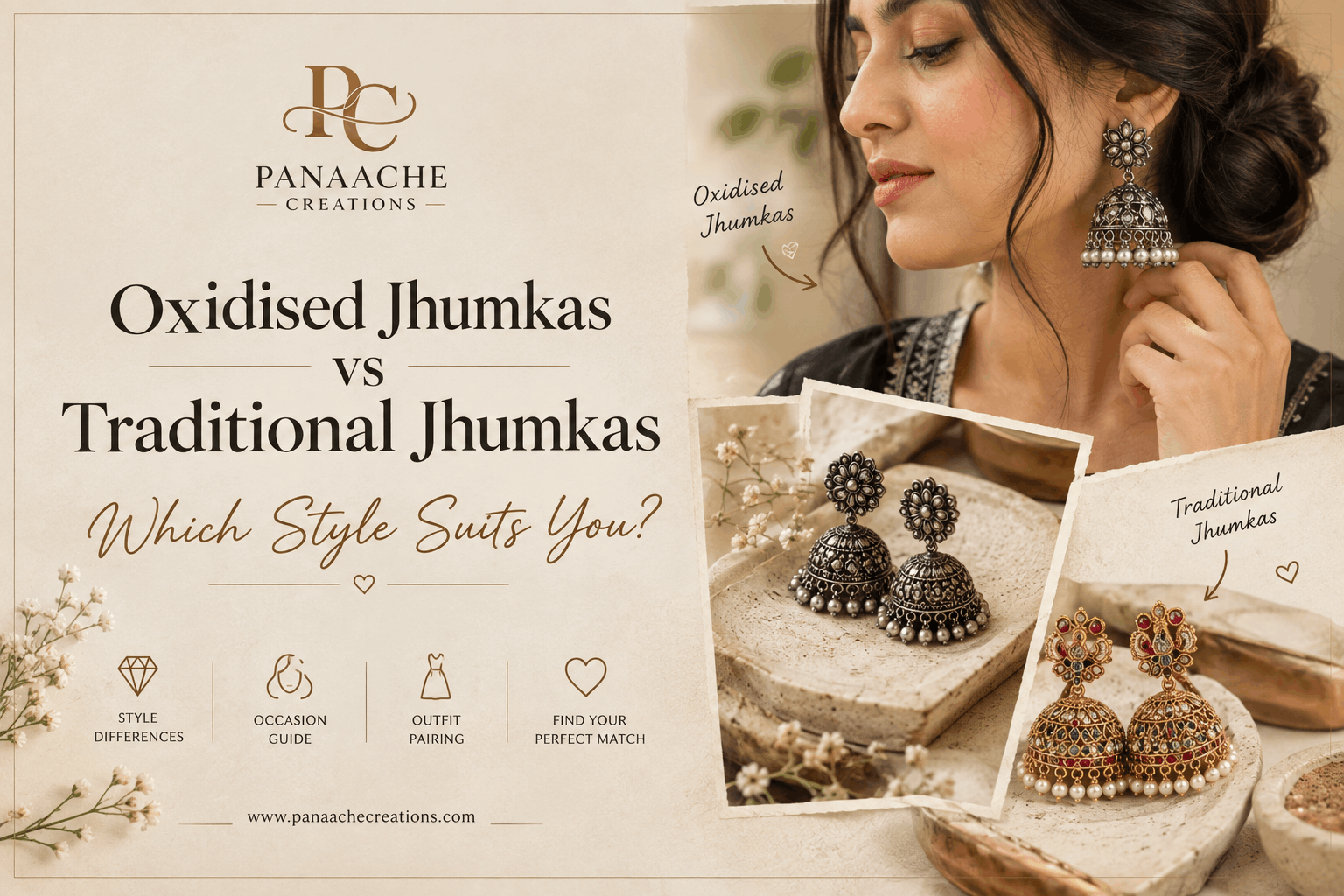
Oxidised jhumkas are known for their darker, antique-inspired appearance. They usually have a silver-toned or slightly blackened finish that gives them a vintage and earthy character.
You will often find oxidised jhumkas with details such as small beads, bells, floral patterns, peacock-inspired designs and engraved textures. Their slightly rustic appearance is one of the reasons they work so well with both ethnic and contemporary outfits.
One of the biggest advantages of oxidised jhumkas is their versatility.
You can wear them with a cotton kurti, printed saree, palazzo set or even a simple Indo-Western outfit. They do not always require a heavily traditional look to stand out.
For someone who likes jewellery with a little character and an effortless feel, oxidised jhumkas can be an interesting choice.
What Are Traditional Jhumkas?
Traditional jhumkas have a more classic Indian jewellery appearance. They are often associated with festive occasions, weddings, religious celebrations and traditional outfits.
Depending on the design, traditional jhumkas may feature gold-toned finishes, pearls, colourful stones, enamel work or detailed motifs inspired by Indian jewellery traditions.
They are especially popular with sarees, lehengas, salwar suits and other ethnic outfits.
Traditional jhumkas can also range from very simple designs to elaborate statement pieces. This makes them suitable for different occasions rather than being limited to weddings or festivals.
If your jewellery collection is mostly inspired by classic Indian fashion, a traditional pair can easily become one of those pieces you keep reaching for.
Oxidised Jhumkas vs Traditional Jhumkas
Although both styles have the same basic jhumka silhouette, the overall effect can be quite different.
1. Overall Look
Oxidised jhumkas usually create a more relaxed, vintage and bohemian appearance. Their darker finish can add contrast to colourful outfits without making the overall look feel too dressy.
Traditional jhumkas generally give a more polished and classic appearance. They can make an ethnic outfit look more festive and occasion-ready.
If you prefer understated vintage jewellery, oxidised jhumkas may fit your wardrobe naturally.
If you enjoy classic Indian jewellery, traditional jhumkas may feel more suitable.
2. Outfit Pairing
Your wardrobe can tell you a lot about which jhumka style you should choose.
Oxidised jhumkas can work well with:
- Cotton kurtis
- Handloom sarees
- Printed ethnic outfits
- Palazzo sets
- Simple salwar suits
- Indo-Western outfits
- Casual festive looks
Traditional jhumkas can work beautifully with:
- Silk sarees
- Banarasi sarees
- Lehengas
- Anarkalis
- Traditional salwar suits
- Wedding outfits
- Festive ethnic wear
Of course, these are not strict rules. Fashion is personal, and mixing styles can sometimes create the most interesting looks.
3. Oxidised Jhumkas vs Traditional Jhumkas: Everyday Wear vs Special Occasions
Think about when you are most likely to wear your jhumkas.
If you want earrings that can be worn regularly with different outfits, a lightweight oxidised design can be a practical addition to your jewellery collection.
For example, a simple oxidised jhumka can add detail to an everyday kurti without making the outfit look overly dressed.
Traditional jhumkas, particularly heavily detailed or embellished designs, may be more suitable when you want your jewellery to become part of the occasion.
They can work especially well for weddings, festivals, family functions and celebrations where traditional dressing is already part of the setting.
That said, a small traditional jhumka can also be worn regularly. The design and size matter just as much as the overall style.
4. Your Personal Style Matters
Instead of choosing a jhumka simply because it is trending, think about the jewellery you already enjoy wearing.
Do you usually choose silver-toned jewellery?
Do you prefer antique-looking pieces?
Do you like simple earrings that you can wear with multiple outfits?
If yes, oxidised jhumkas may naturally fit your style.
On the other hand, if you prefer gold-toned jewellery, pearls, colourful stones and detailed traditional designs, traditional jhumkas may feel more at home in your collection.
The best jewellery is not necessarily the most elaborate piece. It is the piece you actually enjoy wearing.
5. Consider the Size and Weight
Style is important, but comfort should not be ignored.
A large jhumka can look beautiful, but if it feels uncomfortable after a short time, you may not end up wearing it often.
Before buying, consider the size and weight of the earrings, especially if you are planning to wear them for several hours.
For everyday use, smaller or lightweight designs can be easier to manage.
For weddings and special occasions, you may be comfortable choosing a larger statement pair, particularly when the rest of your jewellery and outfit are kept balanced.
Which Jhumka Style Should You Choose?
There is no single answer because both styles serve different purposes.
Choose oxidised jhumkas if you enjoy:
- Vintage-inspired jewellery
- Silver or antique finishes
- Relaxed ethnic styling
- Versatile everyday pieces
- Bohemian or contemporary looks
- Jewellery that works with both ethnic and Indo-Western outfits
Choose traditional jhumkas if you prefer:
- Classic Indian jewellery
- Gold-toned or embellished designs
- Festive dressing
- Wedding and family-function outfits
- Detailed traditional craftsmanship
- Statement jewellery for special occasions
If you love both styles, there is no reason to choose only one.
A small oxidised pair can become your everyday favourite, while a detailed traditional jhumka can be reserved for weddings, festivals and celebrations.
How to Choose the Right Jhumkas for Your Wardrobe
Before purchasing another pair, take a quick look at the jewellery you already own.
If most of your earrings are traditional gold-toned pieces, an oxidised jhumka can introduce a different texture and finish to your collection.
Similarly, if your jewellery collection mostly consists of oxidised pieces, adding one well-designed traditional jhumka can give you more options for festive and formal occasions.
It is also worth considering the colours you wear most often. Neutral, earthy and colourful outfits can all work with jhumkas, but the finish and detailing of the earrings can change the overall appearance.
Most importantly, choose a design that feels comfortable and reflects your own style rather than buying something only because it is popular at the moment.
Final Thoughts
Both oxidised jhumkas and traditional jhumkas have their own place in an Indian jewellery collection.
Oxidised jhumkas bring a vintage, relaxed and versatile feel, while traditional jhumkas offer a classic look that pairs naturally with festive and ethnic dressing.
Your choice ultimately comes down to your wardrobe, lifestyle, comfort and the kind of jewellery you enjoy wearing.
And if you find yourself drawn to both styles, that is perfectly fine. Jewellery does not have to follow one category. A well-chosen collection can have simple everyday pieces alongside traditional statement designs.
The right jhumka is the one that makes you feel comfortable, confident and happy when you put it on.